
Expert for data centers and IT infrastructure
Thomas Wawra is one of the local experts when it comes to data centers and IT infrastructure . With its DCE Academy – Datacenter Experts, it has been offering seminars and training paths on the subject of data centers since 2006. But how do you manage to stay up to date with the latest technology with such a busy schedule? And what are the latest trends in the data center sector? He tells our colleague Stefanie Frühwirth this and much more in the following interview. One thing is certain: it is clearly moving in the direction of micro-datacenters.
We already know her name. Can you tell us more?
Thomas Wawra: Yes, of course! Name aside – I am a graduate engineer from the Technical University of Munich. In 1996, I started my own business in the field of secure messaging in Germany and, after the sale of my US company in 2006, founded the DCE Academy. Due to my experience in the USA, the topic of data centers is very familiar to me: it is crisis-proof, exciting, very heterogeneous.
What exactly does the DCE Academy do?
Thomas Wawra: The DCE Academy is a training and further education institution in the field of data centers. For new employees, we offer training to become a data center specialist. The various trades in the data center pose special challenges, especially in operation, which is the interface between IT and facility.
Is the training also aimed at the EN 50600 data center standard?
Thomas Wawra: Since the end of 2015, all our training courses have been based entirely on EN 50600. Before that, we were guided by other US standards and later “translated” into EN 50600. In addition, our speakers themselves work in the norm circle on a national and international level.
There are many tenders in the field of data centers, how can you best prepare?
Thomas Wawra: After a simple to-do list:
1. What is the state of the art?
2. What is happening in my various trades – fire protection, electricity, air conditioning, waiting cooling, hot or cold aisle. 3. What is available on the market. Overall, the EN50600 offers a helpful orientation here.
What are the “must haves” in the planning and operation of a data center?
Thomas Wawra: From the very beginning, all parties involved have to come to the table – including buyers. Especially in operations, you have the facility side and the IT side together – and in our training we try to sensitize both sides to each other. Such a stakeholder analysis is, for example, an elementary component of the DATACENTER OPERATIONS PROFESSIONAL training.
In your opinion, how can energy efficiency and cost efficiency be combined in the IT environment?
Thomas Wawra: There is no squaring of the circle, it is the classic capex vs. opex, i.e. it is important to weigh up investment vs. operating costs. It is important to look at the whole. Above all, you have to specify what IT needs and plan the data center accordingly.
Keyword EN50600 and TSI. STANDARD – what are the main benefits for data center operators?
Thomas Wawra: The EN50600 deals with all aspects of a data center, from strategy development, business risk analysis, the trade level with electricity and air conditioning, as well as operating and performance indicators for optimization. For the first time, the quality of my data center is measurable – both in Europe and with the EN50600 as an ISO standard worldwide.
With my own data center, I can say that I am at a good level with the EN50600 ?
Thomas Wawra: Exactly. It is a guide. Especially because it will be international, because this EN standard will become an ISO standard in the future.
TSI. STANDARD – what’s the difference here?
Thomas Wawra: TSI. STANDARD is from TÜViT, a company of TÜV Nord – they were the first to act as an external auditor over 10 years ago to certify data centers as an independent third party.
To what extent do these standards affect IT availability?
Thomas Wawra: To put it bluntly: nothing happens without electricity – that means that one plays together with the other and is reflected in the different availability classes 1-4.
How do you stay up to date? What tips can you recommend to our readers?
Thomas Wawra: 1. Visit trade fairs 2. Attend major IT events, with the advantage of getting tips and tricks in addition to knowledge transfer and building a network with like-minded people 3. Read Bernd Dürr’s book on the subject of data centers.
The most important question is where IT is headed. Today, for example, there are data centers that are half empty.
Why are there data centers today that are half empty?
Thomas Wawra: Because the need for space has not developed as expected. Everything has become much smaller and with much higher power.
Where do you see the areas of data center and IT infrastructure in the next 10 years?
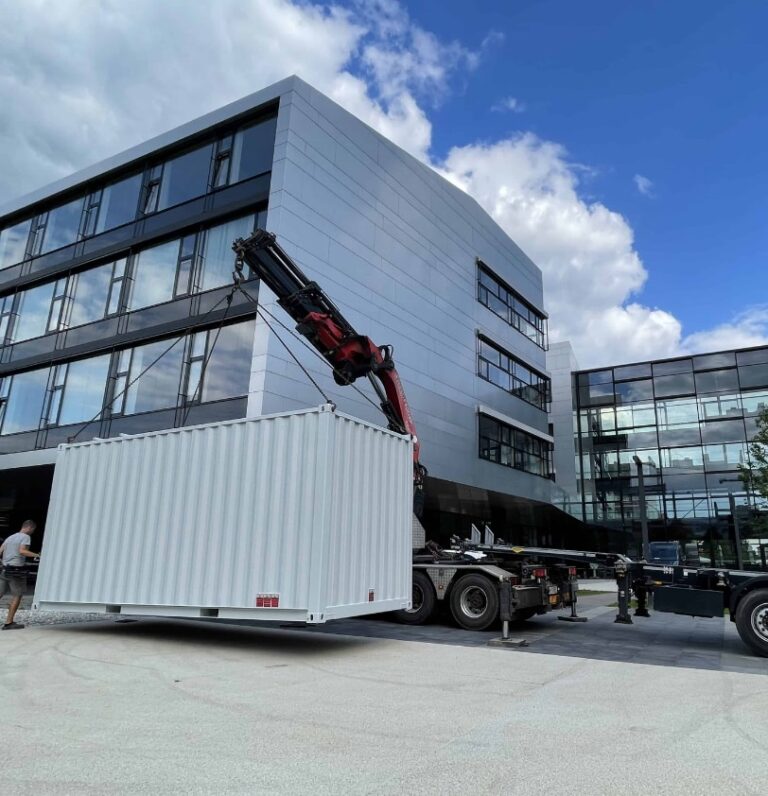
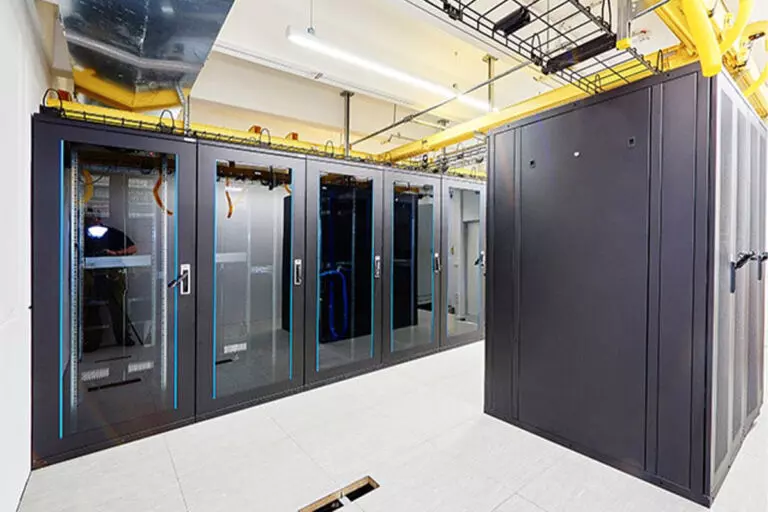
Thomas Wawra: 5G – autonomous driving will be a major topic in the future. We’re going to need a lot of Micro DataCenters and a lot of small DataCenters – small storage rooms. It may be a mix – Micro DataCenter, central DataCenter plus colocations, including the cloud.
Is it an advantage to have several small data centers?
Thomas Wawra: Yes, because more and more data is being generated, so a) we will have more and more small local data centers that process the data using artificial intelligence, b) it makes little sense to have all the data centrally, because I need the data locally and quickly available.
Thank you very much for the interview!
"Fire protection is a very elementary topic – whether with water, argon extinguishing systems or water-based hi-fog systems. In this seminar, all pros and cons are considered accordingly against the background of capex vs. opex (investment vs. operating costs) and the best solution for the customer is worked out."
Dipl. Ing. Thomas Wawra - Geschäftsführer, DCE Academy - Datacenter Experts