

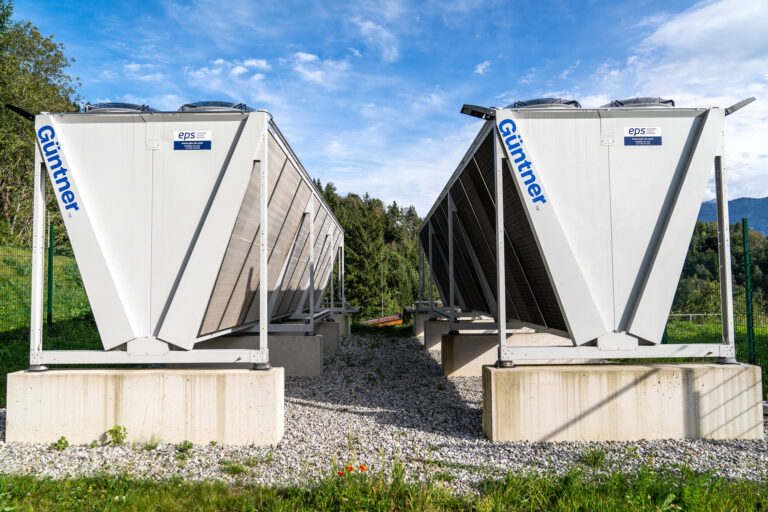
EPS air conditioning concept for the data center
Climate-friendly solutions for your IT and server room
As the volume of data grows, so does the demand for energy-efficient air conditioning solutions in the IT infrastructure sector. Choosing the right cooling concept depends on numerous factors, including the size of the data center, the performance of the hardware, and the desired energy efficiency standards.
However, modern cooling solutions from renewable energies are still not standard in most data centers. High operating costs and environmentally harmful effects are often the result. There is therefore still a lot of potential in IT cooling solutions.
Criteria for selecting your suitable IT air conditioning system:
- Maximum heat load of the data center or server room
- Packing density per cabinet (maximum heat load per rack)
- Number of server racks and servers (on-demand performance determination)
- Temperatures, temperature delta and humidity in the data center
- Selection of refrigerants to use
- Scalability, modularity, redundancies
- Monitoring and control
- Availability Requirements, Redundancy Requirements
- Environmental conditions and risks, structural conditions
- which components (air conditioning technology or refrigeration technology) of the refrigeration system are already in use at the site
- Profitability Considerations: Investment Costs vs. Operating Costs
- Consideration of possible subsidies
Overview of IT climate control solutions for your server room
- Air conditioning above the raised floor: Here, cold air is directed through the raised floor and delivered specifically to the server rack rows. The warm exhaust air is extracted through the back of the server racks and led back to the air conditioning system.
- Heterogeneous and homogeneous arrangement of server cabinets with cold/hot aisles: Cold and warm air flows are physically separated, which significantly increases the efficiency of cooling.
- Targeted server cooling with RCS server racks (RCS Regulated Cooling Solution): the server is cooled with pinpoint accuracy by controlling the cold air.
- Air conditioning via cold walls
- Air conditioning with in-row rack cooler (air cooling): Split air conditioners or precision air conditioners are flexible and more cost-effective
- Air conditioning with in-rack units (air cooling)
- Free cooling, direct or indirect: this cooling process uses environmental conditions (such as cool outside air or cold water from natural sources) to cool data centers
- Water cooling: often used for high-performance computing (HPC) systems because it allows for high heat absorption. The waste heat is dissipated via water circuits and can even be reused, for example, for building heating.
- Air-to-air heat exchangers
- Hybrid Cooling: Hybrid cooling combines air and water cooling. Due to its high heat capacity, water is used for direct heat dissipation, while air cooling provides additional heat dissipation.
Top Products
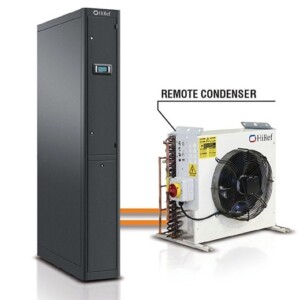
We recommend cooling systems from our long-standing partners, which stand for the highest quality in the field of IT air conditioning.
Natural Refrigerants in the Data Center - F-Gas-Free Future
Natural and cost-efficient means are increasingly being used in the selection of refrigerants in the server room. Conventional refrigerants that are still used in many air conditioning systems are often hydrofluorocarbons (F-gases). These substances have a high global warming potential (GWP) and contribute significantly to global warming, e.g. in the event of leaks.
The European Union’s F-Gas Regulation aims to greatly reduce these emissions and further promote the use of sustainable alternatives.
Natural refrigerants have very low or global warming potential. Therefore, they are not affected by the F-Gas Regulation.
Natural refrigerants such as propane (R290), CO₂ (R744) and ammonia (R717) are therefore becoming increasingly important in data centers. They are environmentally friendly and often more efficient than synthetic alternatives.
Examples of use in the server room:
- Propane: Particularly suitable for small to medium-sized systems.
- CARBON: Used in systems with high pressure requirements.
- Ammonia: Used for large industrial refrigeration equipment.

Refrigeration consumers in the server room
The 4 main refrigeration consumers and their requirements
- SERVER
- they are the central components of every data center and thus represent the largest consumers of refrigeration. They generate a large amount of heat. Especially High Performance Computing “HPC” – high-performance servers, can generate waste heat of up to 30kW or even more per server rack.
- Storage
- Systems such as SANs (Storage Area Networks) or NAS (Network Attached Storage) manage large amounts of data, and while their waste heat is usually lower than servers, it can be significant in modern high-performance storage systems. Above all, they need precise cooling.
- Network
- Switches, firewalls or routers are essential for data communication in the data center. Their waste heat is usually generated by processors or power supplies. Their heat load can also be considerable .
- Other IT equipment in the data center
- Other components in the server room are e.g. UPS systems, monitoring systems, IoT devices , etc. UPS systems generate a high amount of waste heat, especially through their batteries and inverters.
Benefit from our expertise
25
Years of experience
78
Successfully implemented climate concepts
50
Colleague
300+
satisfied customers in the
Domestic and international
We will be happy to support you in the planning and implementation of your IT climate solution!
References
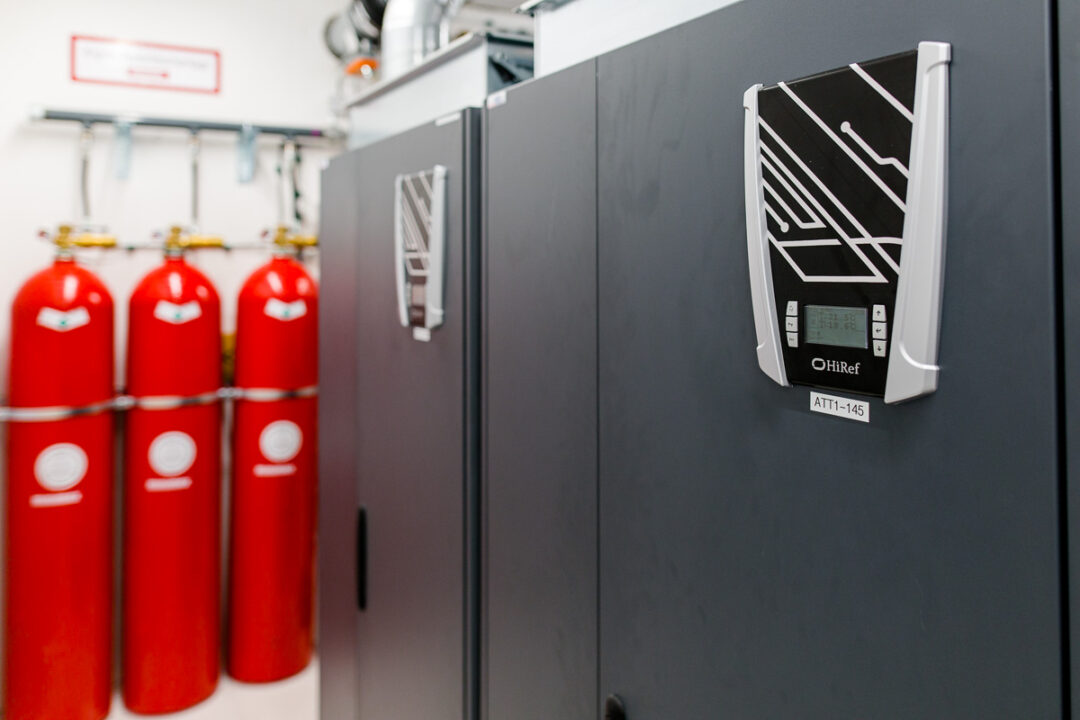

“The data center availability of the new server room infrastructure must be ensured according to current standards. Both the entire power supply and the air conditioning are designed as a multi-path supply with 2N redundancy. A 2(N+1) was produced by modular UPS systems per path to ensure the required availability even during maintenance work,” explains Stefan Austaller, IT division manager at STIWA.