

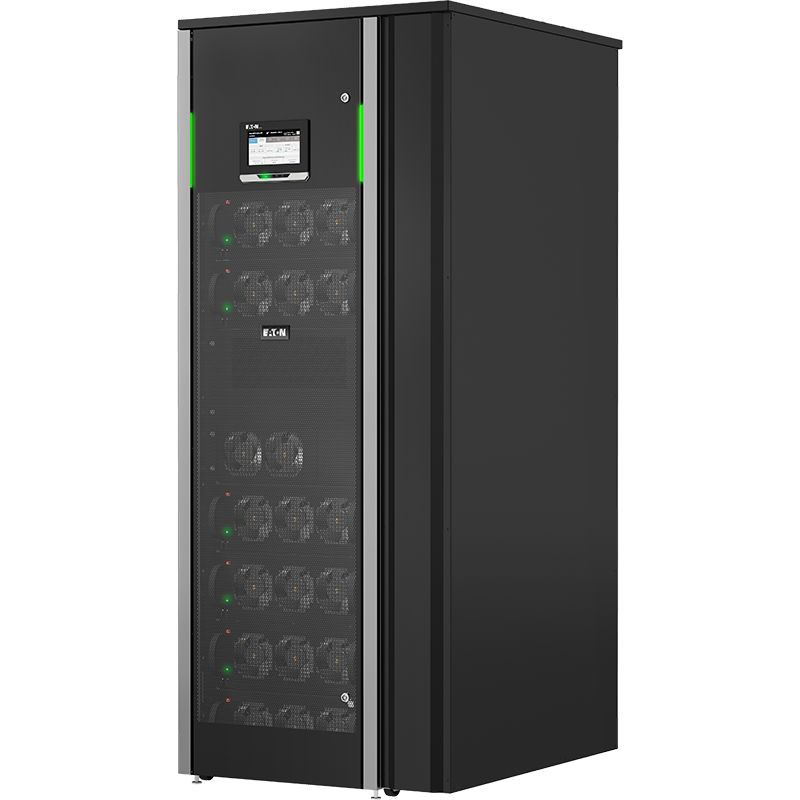
Eaton UPS System 93PM Generation2
Higher availability and true modularity with the Eaton UPS 93PM G2 3phase
The main purpose of a UPS system is to ensure that power is available at all times – no matter what happens. UPS, or UPS in English, stands for “Uninterruptible power supply”. An IT UPS system consists of a battery, inverter, charger, control electronics.
Modular UPS 50kVA to 360kVA, 1 to 4 or 1 to 6 modules. UPS power supply from the experts. Modularity and scalability for more flexibility in the use of UPS in data centers, IT systems, telecommunications, IT networks. UPS service, UPS maintenance. Depending on requirements and area of application, the Eaton IT UPS system 93PM Generation2 can be expanded on a modular basis. UPS systems can have different capacities and functions depending on requirements.
Hot-swap modules can be swapped out or added to the Eaton 93PM Generation2 at any time – without turning off or bridging the system.
Automatic firmware update when a new UPM (Power Module) is installed. The new module copies the firmware from the installed modules. Automatic upgrade of rated power when more UPMs are installed. Install the new UPS module, and the device will automatically update its rated power.
With UPS-as-a-Reserve technology, a surplus of electricity is fed directly back into the grid through the UPS or, in the event of a shortage, electricity is drawn directly from the grid. In this way, the UPS contributes to GREEN IT and balances the supply and demand of electricity. For an ecological energy industry (EnergyAware).
Flexible ventilation systems (from front to back, from front to top, or with fans in the upper area). With pre-configured and pre-programmed bypass components. Higher availability, modular design (hot swap, updates, power upgrade). High IT resilience/tolerance to disruptions in the event of failures (hot sync, Advanced Battery Management). Available with VRLA or lithium-ion batteries .
Areas of application of the 93PM Gen2 IT UPS system
- IT Applications
- Colocation Data Centers
- Medium and large data centers or Server rooms
- Mission-critical applications
- Critical infrastructure in finance and banking
- Commercial buildings and industrial complexes
- Transport infrastructure
- Medical facilities
- Telecommunications equipment
- Process Control Equipment