

The underestimated 24/7 reality
An uninterruptible power supply (UPS) runs quietly and reliably in the background – and that is exactly what makes it an underestimated problem child in plant technology. The most common sentence in the consultation: “Why should I change them? It was hardly used.”
The answer lies in a simple calculation.
A UPS system does not run “sometimes”. It runs around the clock, 365 days a year – that’s almost 8,760 operating hours per year. After 10 years, the system already has over 87,000 operating hours on the meter.
The customer’s subjective perception is deceptive: a UPS that has “hardly been used” still has the same runtime as any other – it has rarely had to intervene.
When is the best time for a UPS replacement?
The answer depends on whether it is a small system or a central system.
Small systems (pluggable UPS devices)
Pluggable UPS devices for individual workstations or small servers should be replaced after 8 to 10 years. Batteries and general component aging play a major role here.
Central UPS Systems
For larger, central systems, longer but clearly defined intervals apply:
- UPS maintenance: annually
- UPS battery replacement: every 6-8 years
- Wear parts (fans, capacitors): typical after 7 years
- Total system: customary after 15–20 years

Technology is also aging
In addition to physical wear, there is another, often overlooked, reason for an early replacement: the further development of UPS technology. Modern systems achieve efficiencies of 96% and more – older devices are often 88% or below. This makes a considerable economic difference.
Why an earlier exchange can make economic sense
An efficiency difference of 8 percentage points sounds small – but it is not. Example:
UPS with 40 kVA, 60 % average utilization, electricity price 22 ct/kWh:
Old plant (88 %) | New plant (96%) | |
Power dissipation | ~3.5 kW | ~0.8 kW |
Energy loss/year | ~23,600 kWh | ~5,400 kWh |
Electricity costs/year | ~5.200 € | ~1.200 € |
Savings/year | ~4.000 € |
Over a period of 15 years, this adds up to around €60,000 in energy savings – even without the reduced maintenance costs and increased reliability of the new system.
Do I have to switch off my consumers when replacing a UPS?
That depends on the installation. The crucial questions:
- Is there an external bypass?
- Is there a redundancy system?
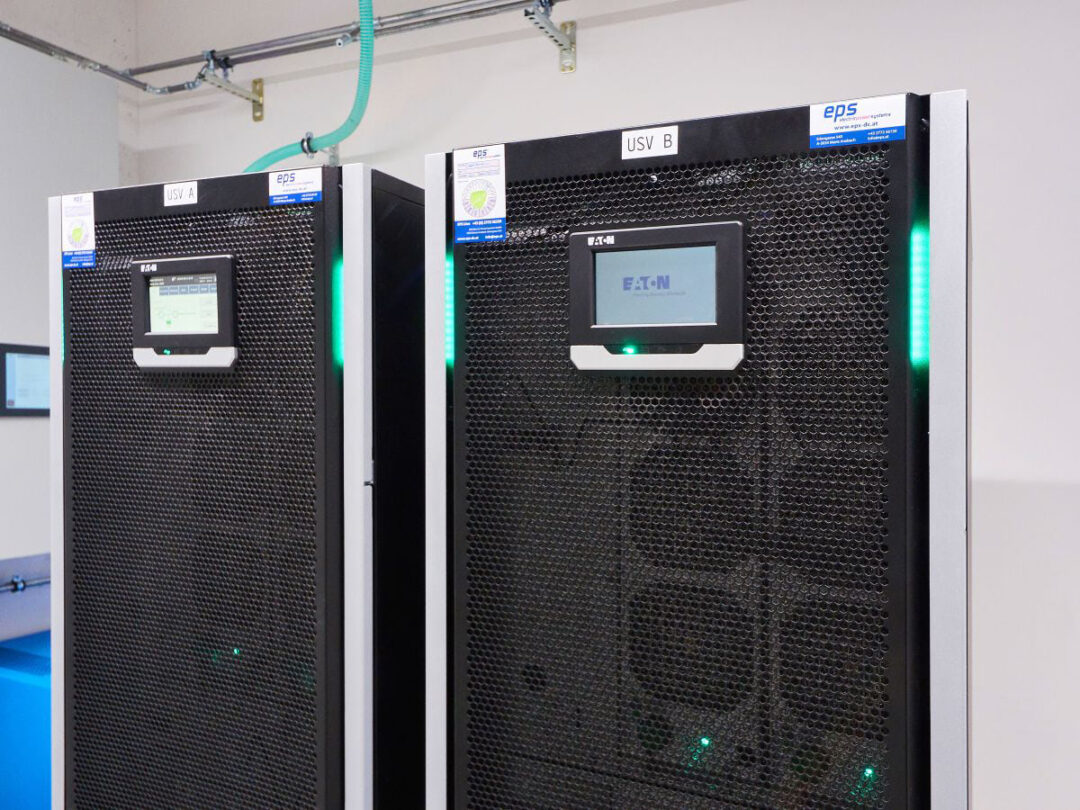
- Does the system work with two UPS (A/B system) rails?
If one of these conditions is met, the exchange can often take place without switching off the consumers. If this is not the case, it is essential to choose an operational period – and a well-thought-out backup strategy should be ready for emergencies.
What is often forgotten in UPS dimensioning
If you are planning a new UPS, the first thing that comes to mind is the pure power in kVA. There are other technical aspects that must be taken into account from the beginning:
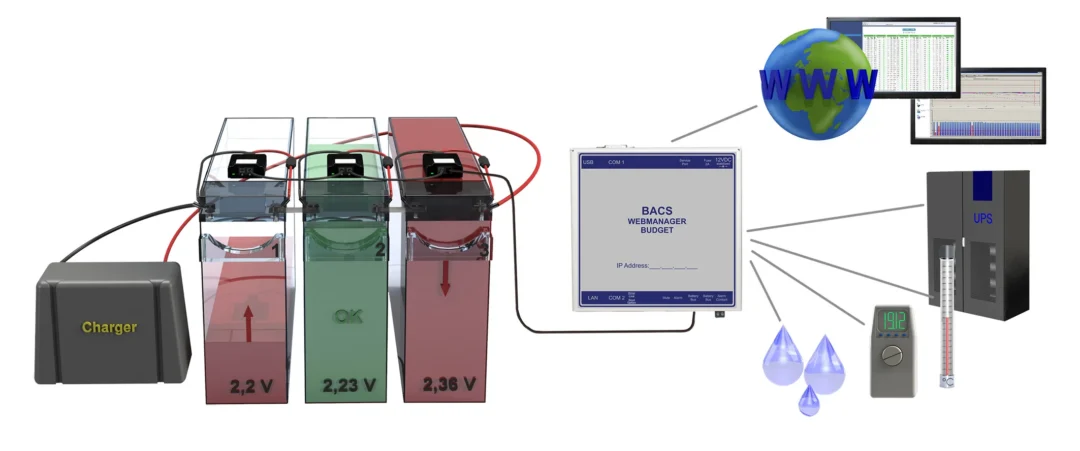
Ventilation: Batteries produce hydrogen during the charging process. Either sufficient room ventilation must be proven – or an H₂ sensor must take over the monitoring.
Cooling: Every UPS emits waste heat. The necessary cooling capacity of the installation room must be calculated so that overtemperatures are excluded.
Short-circuit current and selectivity: The UPS system must fit into the protection concept of the overall system. A short-circuit current calculation ensures that upstream fuses trip selectively.
Bridging time: Here it is worthwhile to calculate realistically. The nominal capacity applies to full load – with a typical load of 50–60%, the actual bridging time is significantly longer. An honest calculation avoids oversizing and saves investment costs.
Conclusion: Waiting costs more than swapping
A UPS system that does its job quietly and reliably suggests robustness. In fact, batteries, capacitors and fans are approaching their limits unnoticed – and modernly dimensioned, efficient new systems often pay for themselves faster than expected.
The most important points of note at a glance:
- Annual maintenance is mandatory
- Replace the UPS battery and wear parts after 6-8 years
- Replace the entire system after 15–20 years at the latest
- Using efficiency comparison as a cost-effectiveness argument
- Clarify bypass/redundancy in advance to minimize downtime during replacement
If you have any questions about the specific system, dimensioning or replacement planning, we will be happy to advise you.